
Works & Applications “The Power of Urushi
The Power of Urushi” is a family of high‑value finishing materials engineered by reconstructing the optical properties and multilayered structure of natural lacquer.
Designed for versatility, these materials support applications ranging from architectural interiors to mobility design.
We introduce the collection through five unique expressions of urushi.
The Power of Urushi
01. Amber Color / Transparency
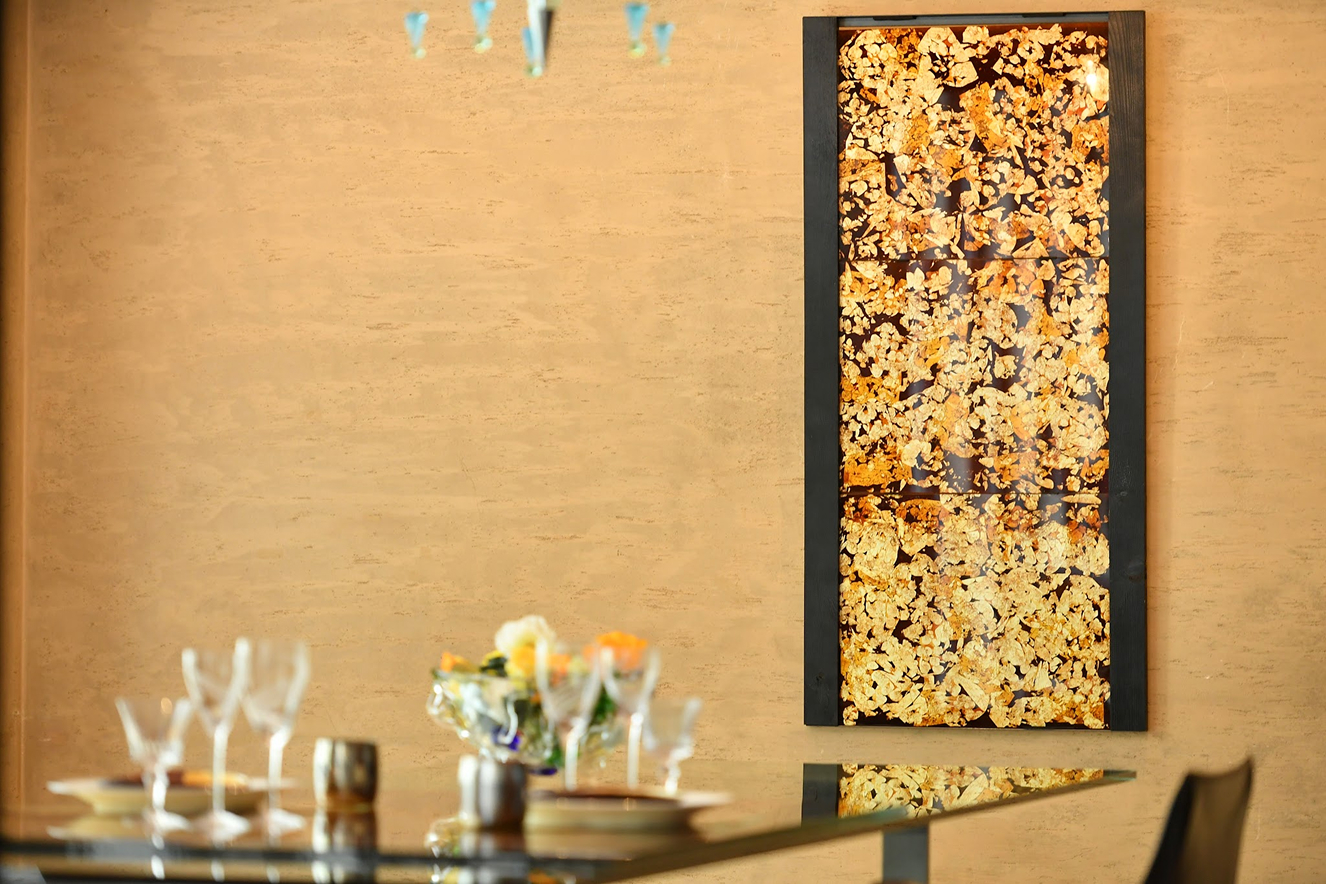
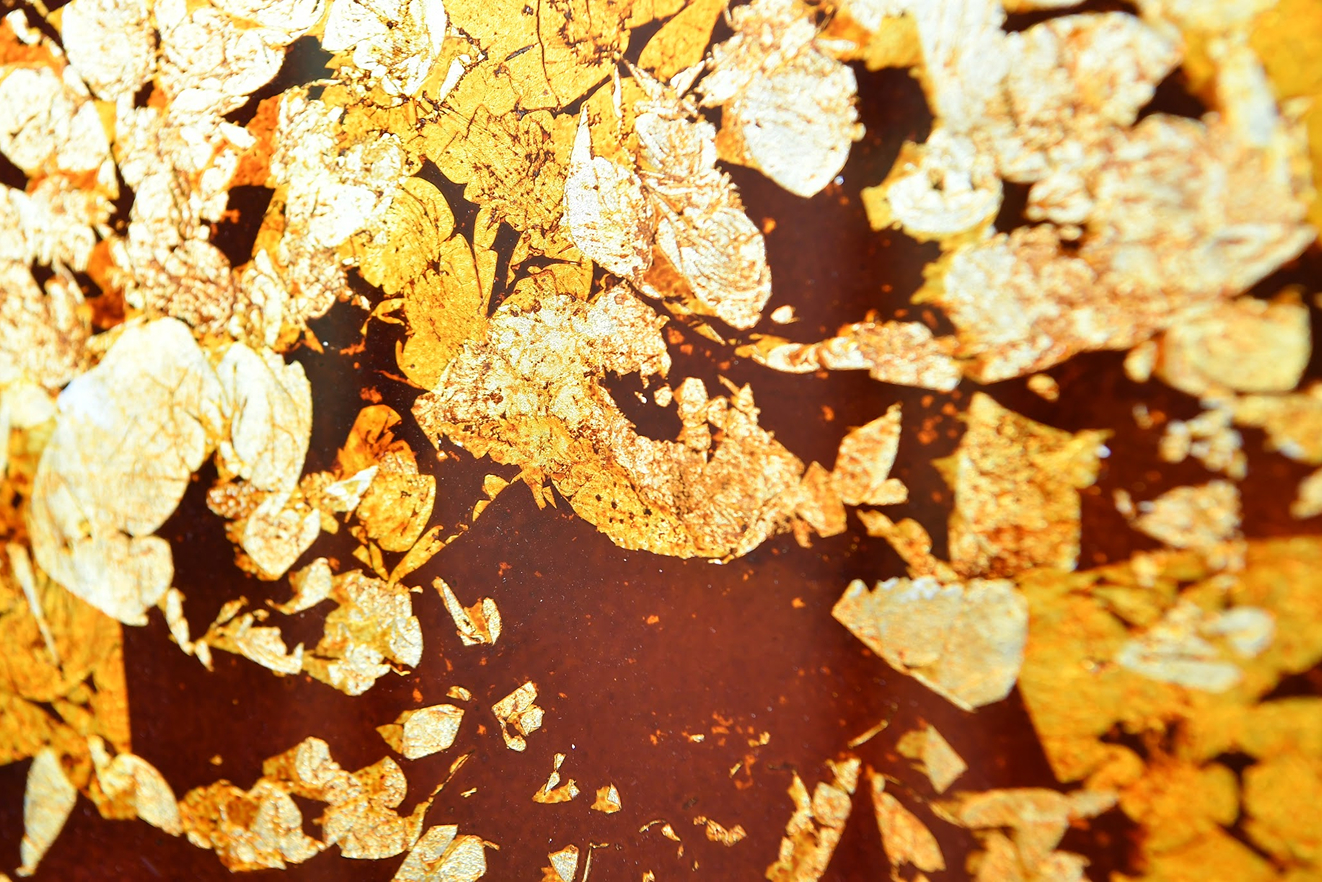
"Full Bloom Cherry Blossom Crest" Triple Panel — Rhus Project
Urushi is a two‑component sap that emerges when the lacquer tree is gently scored. Functioning as a natural sealant—much like a scab that closes a wound—it carries inherent qualities such as transparency, optical depth, controlled reflectivity, and long‑term durability. By reinterpreting these characteristics through contemporary techniques, urushi introduces exceptional aesthetic richness and a distinct material presence to architectural environments.
| Features | Urushi is said to continue curing for up to thirteen years. Depending on the installation environment, the surface gradually shifts toward a warm amber tone over time. |
|---|---|
| Specifications | Glass with natural urushi pattern / Natural lacquer, silver leaf |
| Pattern Type | Sakura |
| Details | This work is composed of three glass panels arranged side by side. During the creation process, Natural Pattern formed by urushi extend across the boundaries of the panels through capillary action, resulting in a continuous landscape that appears as a single unified surface. This spontaneous formation draws on the spirit of kawari‑nuri techniques refined in the late Edo period, where artisans embraced controlled unpredictability to cultivate organic, evolving expressions within lacquer surfaces. For larger installations, the piece can be divided into ten tile‑like glass sections, significantly reducing the burden of transportation and on‑site installation. |
| Development Background | Created as part of the Rhus project (commissioned production and installation for designers) |
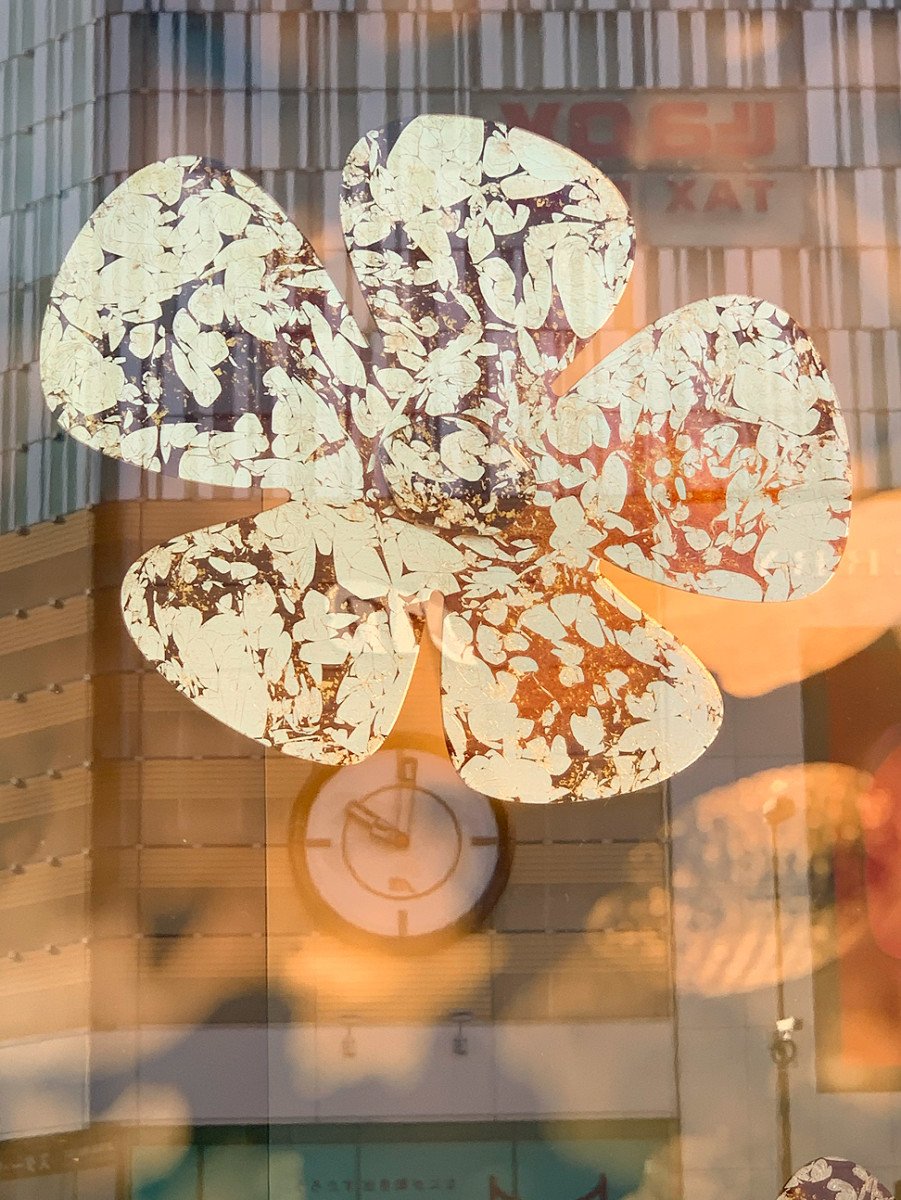
Design: PDC - Product Design Center
| Specifications | Acrylic Natural Pattern / Natural lacquer, silver leaf |
|---|---|
| Pattern Type | Sakura |
| Development Background | Created as part of the Rhus project (commissioned production and installation for designers) |
| Rhus project products are crafted by a team of artisans from regions with long-standing lacquer traditions—Echizen in Fukui Prefecture, Yamanaka and Wajima in Ishikawa Prefecture, and Hirasawa in Nagano Prefecture. Working under Duco’s material development and technical direction, these artisans collaborate to produce each Rhus project piece. |
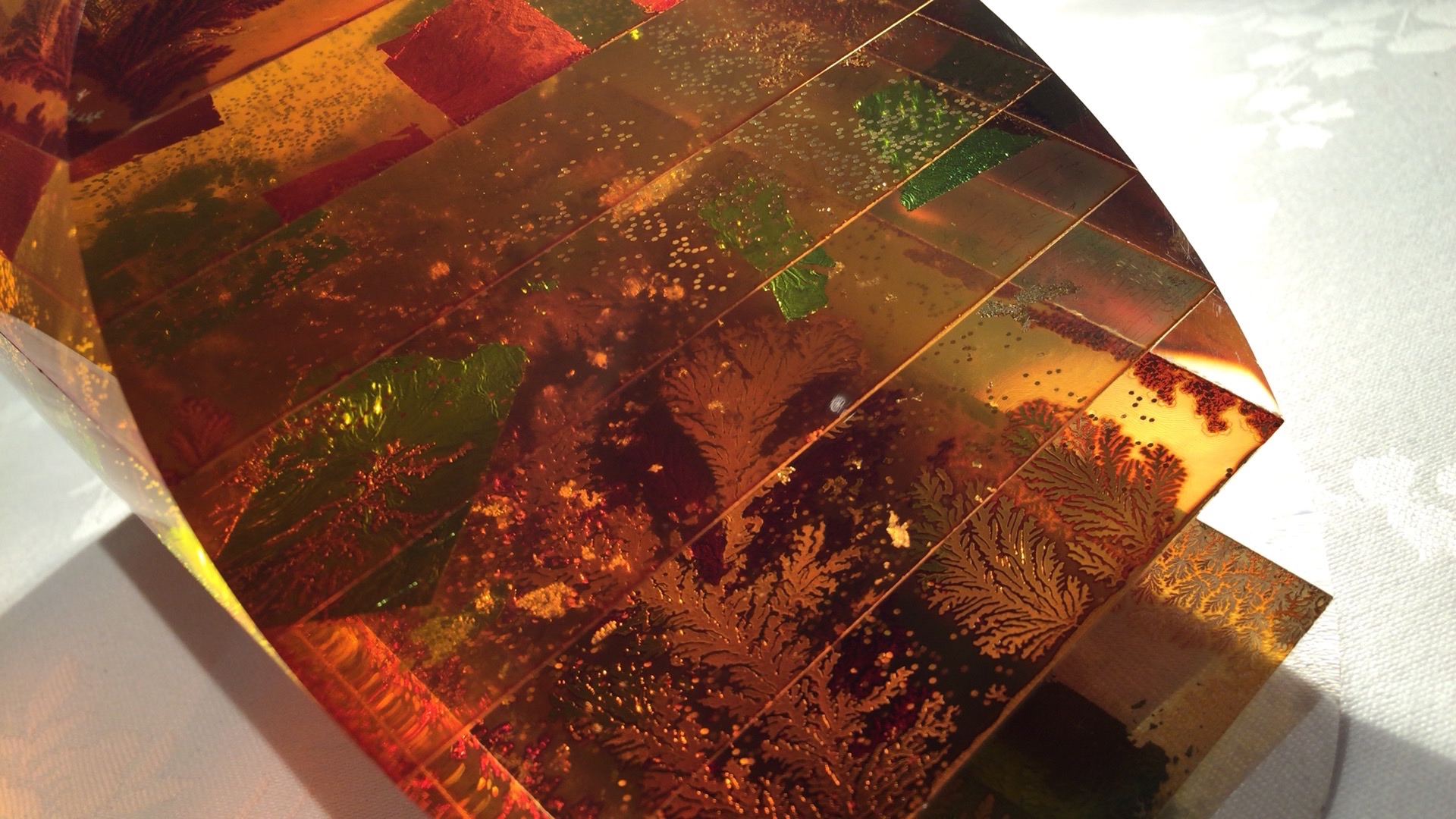
Jewelry Store Display Stand, Acry-U-ryl (Patented)
| Joint Development | Kitaguchi Plastic Co., Ltd. (Joint patent application filed) |
|---|---|
| Acry-U-ryl is a translucent lacquer material created from the combined properties of urushi and acrylic. By using lacquer as an adhesive layer sandwiched between two acrylic sheets, the material achieves a distinctive clarity and optical depth. When lacquer sourced from different production regions is used, subtle gradations of amber naturally emerge. Acry-U-ryl can be processed using standard urushi techniques. Blocks are produced in sizes up to 100 mm × 100 mm × 1000 mm. |
The Power of Urushi
02. Interaction with Light
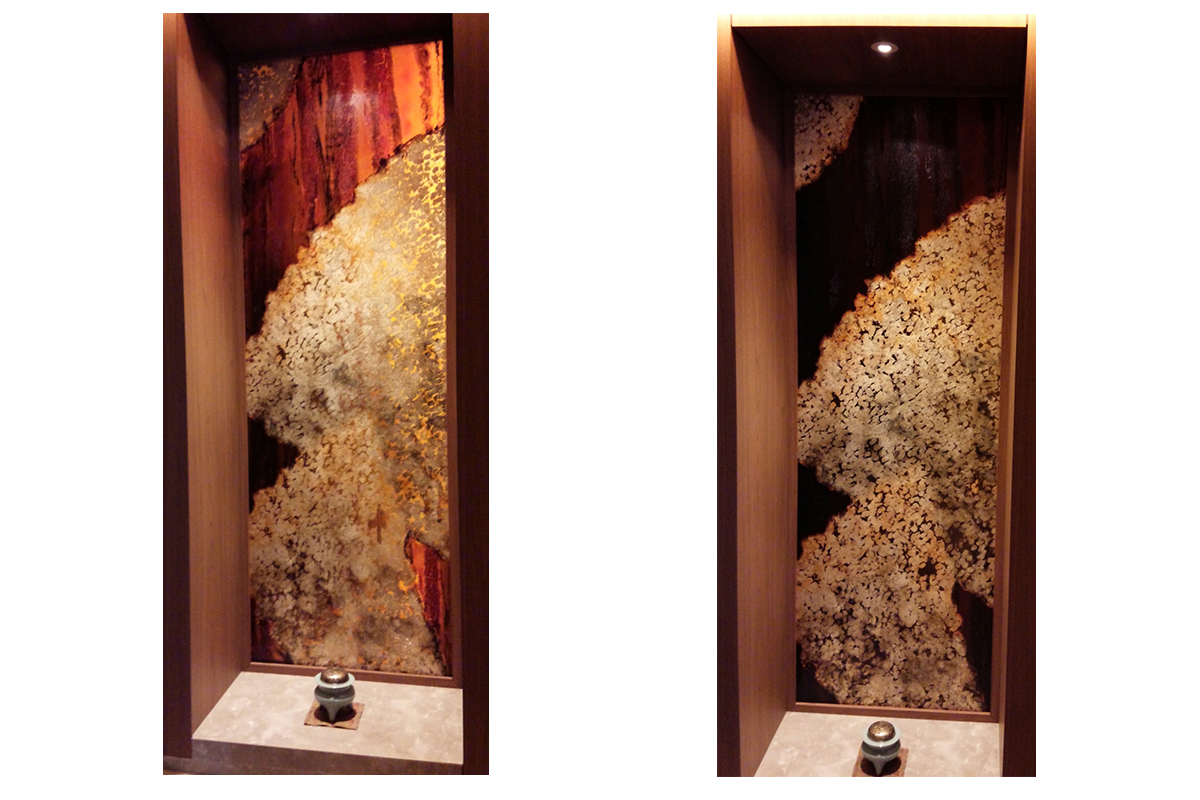
Tokonoma "Fan Sakura" Rhus Project (Backlight: ON / OFF)
Interaction with Backlighting and Urushi
By integrating backlighting with urushi, we create a surface where light and material respond to one another, producing richly expressive visual effects.
When unlit, the deep texture of the lacquer brings a quiet stillness to the space; when illuminated, a soft glow emerges from within, revealing a dreamlike sense of depth.
This characteristic adds both luxury and calm to environments such as mobility interiors, hotel lobbies, and guest rooms.
On the opposite side of the tokonoma is a private room designed so that the expression changes between lit and unlit conditions.
The lacquered black background shifts to a reddish tame tone when the rear lighting is activated.
| Specifications | Glass / Natural lacquer / Silver leaf |
|---|---|
| Natural Pattern Types | Sakura / Bark |
| Details | In applications involving light, the expression changes not only with the lighting being switched on or off, but also with the type and color of the light. Direct illumination on the artwork is not always necessary. Just as gold and silver leaf in traditional folding screens softly reflected minimal ambient light, the foil used in our work reveals its presence even in restrained lighting environments. By placing Duco materials appropriately within a space, the surface gently captures surrounding light, adding a subtle brightness and nuanced expression to the environment. |
| Design | Hamada Design Inc |
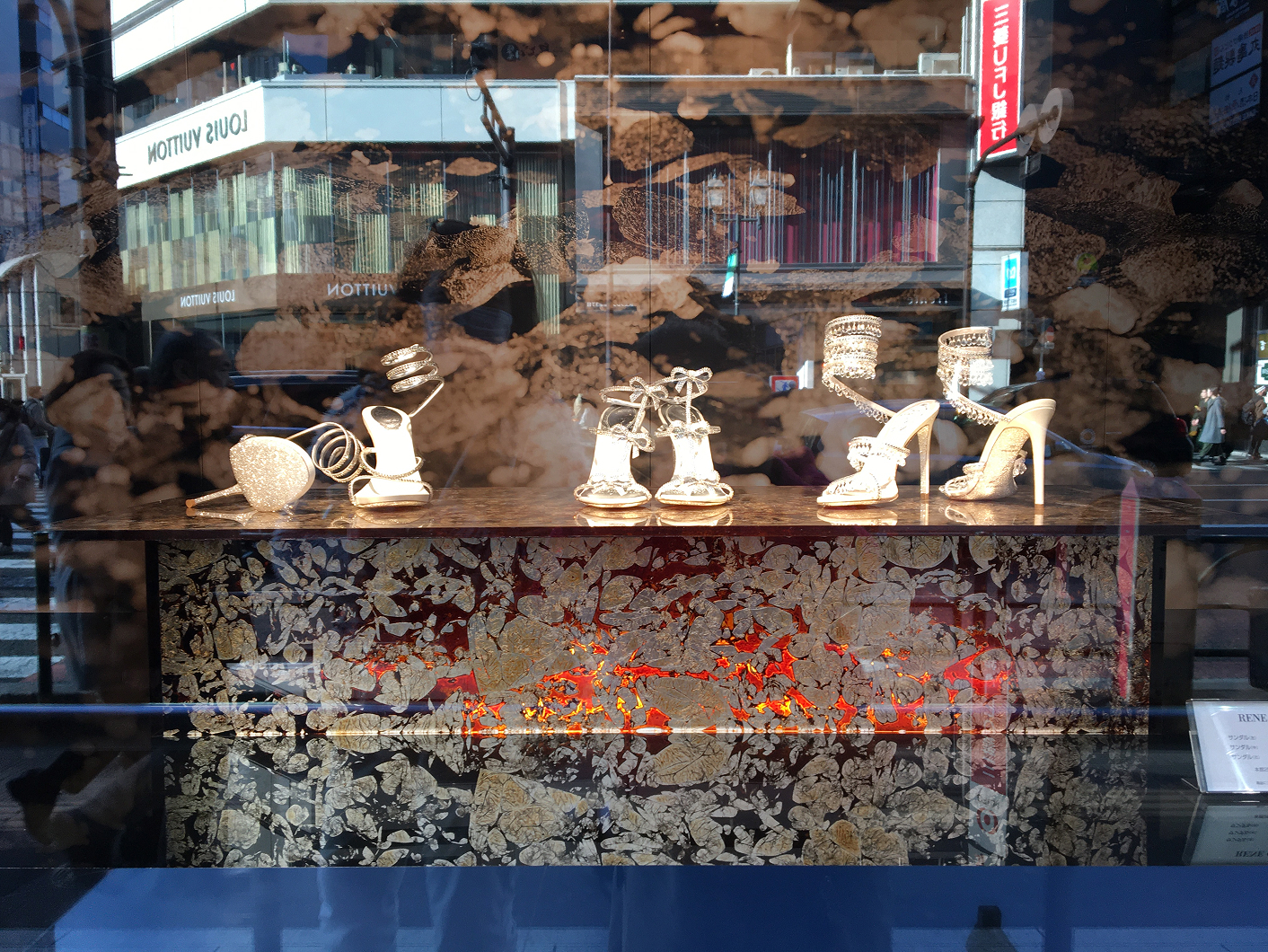
PDC - Product Design Center
| Natural Pattern Type | Sakura |
|---|---|
| Features | When acrylic panels with natural urushi patterns are illuminated from within, the lacquer takes on a deep reddish‑black tone. Switching the lighting to neutral white transforms the lacquer into a warm, orange‑tinged hue. Under blue light, the lacquered background darkens into a dense black and becomes non‑transmissive, revealing one of urushi’s unique optical characteristics. |
The Power of Urushi
03. Depth of
San’en
transcending the Flat Surface with a Microscopic Perspective
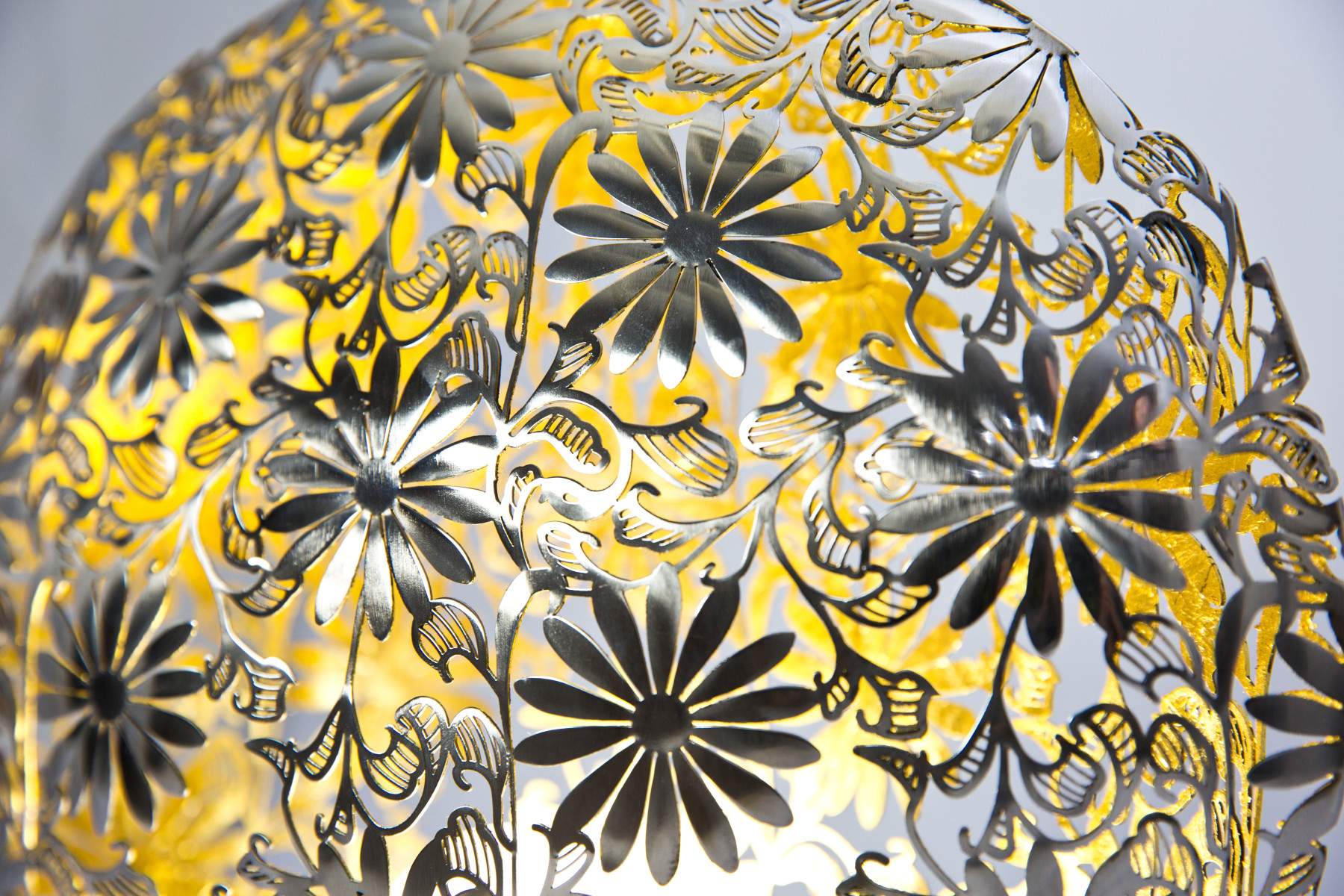
Chrysanthemum Crest "Mahorobi" Sagamihara City Consortium Acceleration Support Project
Expressing the Oriental Perspective of “
San’en
” through Layers of Urushi
By interpreting the Oriental pictorial method of
San’en
through layered urushi, we create an overwhelming sense of three‑dimensionality—suggesting overlapping mountain ranges and the depth of drifting mist within lacquer films only tens of microns thick.
This approach brings a sense of expansiveness and psychological depth to compact environments such as vehicle interiors and urban spaces, far beyond what numerical dimensions alone can convey.
About
San’en
— The Oriental Concept of Spatial Depth
In East Asian painting,
San’en
is a unique method for capturing depth by varying the direction in which the subject is visually “distanced.” It consists of three modes:
Kōen (High Distance) — depth that opens upward
Shin’en (Deep Distance) — depth that recedes inward
Hei’en (Level Distance) — depth that extends quietly across the horizontal plane
Unlike Western one‑point perspective,
San’en
does not rely on a fixed viewpoint.
Instead, it layers multiple perspectives to express a depth that contains the passage of time.
How Duco interprets
San’en
Three‑dimensional works generate multiple viewpoints through the layering of materials and the reflection of light, creating a multi‑layered depth reminiscent of
San’en
.
Glass maki‑e works place maki‑e on both the front and back surfaces of glass, allowing metallic powders to overlap and shift in expression depending on the viewing angle—producing a depth infused with time.
Natural Pattern formed spontaneously by lacquer reveals deep landscapes within limited surfaces, as foil and lacquer transparency modulate light absorption.
Duco reinterprets the
San’en
sensibility—born from the Eastern pursuit of discovering infinite depth within confined spaces—through contemporary materials and techniques, presenting a quiet yet profound spatial worldview.
| Materials | Stainless steel / Natural lacquer / Gold leaf |
|---|---|
| Details | Each technique—three‑dimensional construction, maki‑e, and natural urushi patterns—carries its own expression of
San’en
. Rooted in a sensibility developed within confined pictorial spaces, this perspective technique enables the creation of a distinctive spatial worldview. The San’en aesthetic did not arise to depict vast landscapes realistically, but rather to explore how deeply a world could be embedded within a limited surface—an approach that resonates strongly with Duco’s craftsmanship. |
| Project | Sagamihara City Consortium Acceleration Support Project |
| Sagamihara Incubation Center Ltd. Fuji Industries Opto Design Inc. Aoyama Gakuin University Duco Co., Ltd. |
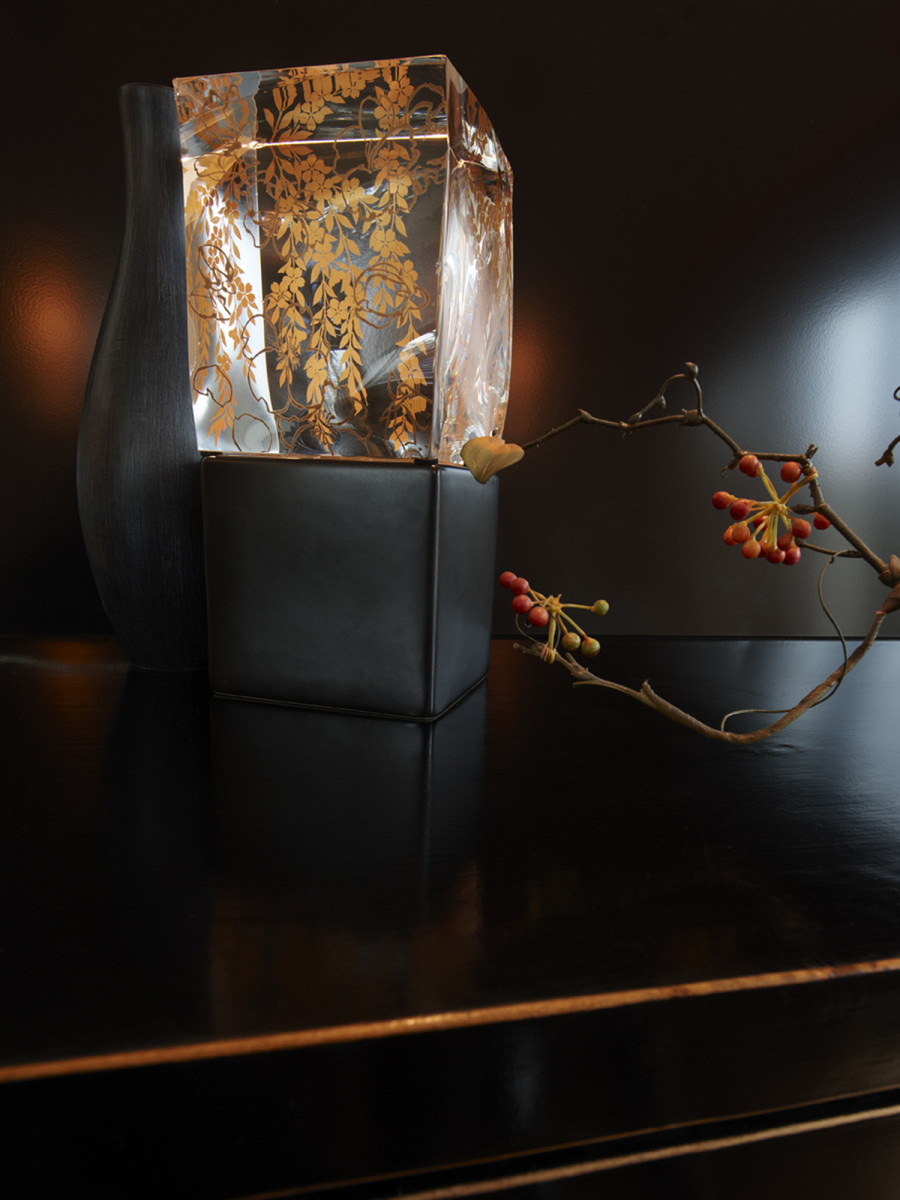
Ice-Light "Weeping Sakura” — Rhus Project, I Residence
An urushi‑glass composition capturing the quiet shimmer of falling sakura, crafted for I Residence under the Rhus Project.
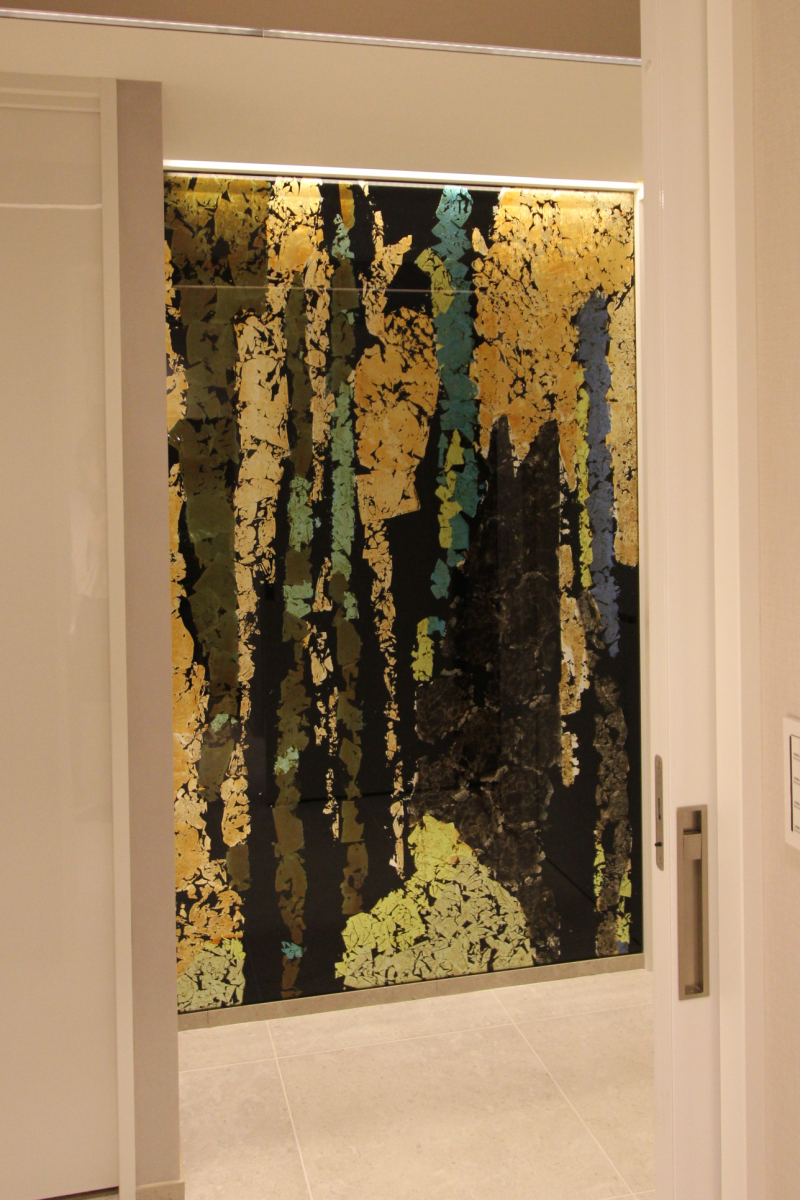
"Lavender Forest" —Design: KANN DESIGNING OFFICE
Takanawa Project
A refined interior material expression inspired by the atmosphere of a lavender grove, designed by KANN DESIGNING OFFICE for the Takanawa redevelopment.
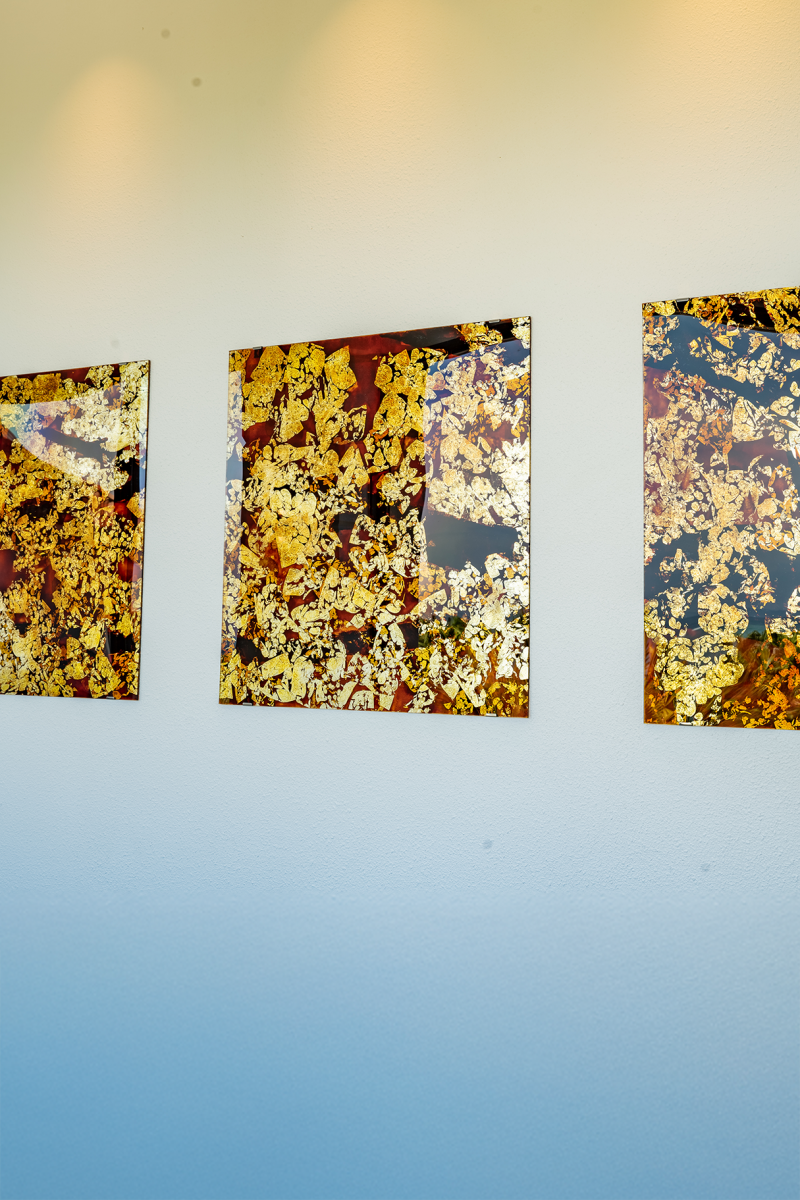
"Okinawa Sakura"— Design: ILIA Corporation, Ryukyu Hotel & Resort/
Nashiro Beach
A luminous sakura motif developed with ILIA Corporation, bringing Okinawa’s seasonal colors into the Ryukyu Hotel & Resort at Meijo Beach.
The Power of Urushi
04. Traditional Maki‑e
Carrying Forward Timeless Narratives into Contemporary Function
“Drooping Sakura” Optical Glass — Rhus Project
By integrating the thousand‑year tradition of maki‑e into contemporary architectural and interior materials, this work unites the refined beauty of artisanal handcraft with Duco’s proprietary durability technologies.
Rather than functioning as surface ornamentation, it stands as a singular art piece that conveys corporate identity and embodies a lasting brand narrative.
Maki‑e originated in the Nara period and evolved through the Heian, Muromachi, and Edo eras into a uniquely Japanese decorative art.
Patterns are drawn in lacquer and dusted with gold, silver, tin, or other metal powders,producing a dimensional brilliance that shifts with the angle of light.
By the Edo period, the technique had reached extraordinary sophistication and came to be regarded as one of the world’s most intricate forms of craftsmanship.
| Specifications |
Base material: Titanium steel plate / Optical glass Maki‑e: Natural lacquer / Titanium powder / Gold powder / Silver powder / Platinum powder |
|---|---|
| Features |
On titanium, the lacquer absorbs and diffuses the metal’s mirror‑like reflections, creating a warm amber luminosity. The interplay of multiple metallic powders produces a sculptural depth unique to this hybrid material. Within optical glass, the reflective layers multiply, allowing the maki‑e motifs to shift and refract as the viewer moves—an effect reminiscent of a prismatic or kaleidoscopic structure. The entire piece is crafted with uncompromising precision, integrating traditional maki‑e processes across its surface. |
| Collaborative Development | OHARA Inc. / Rhus Product |
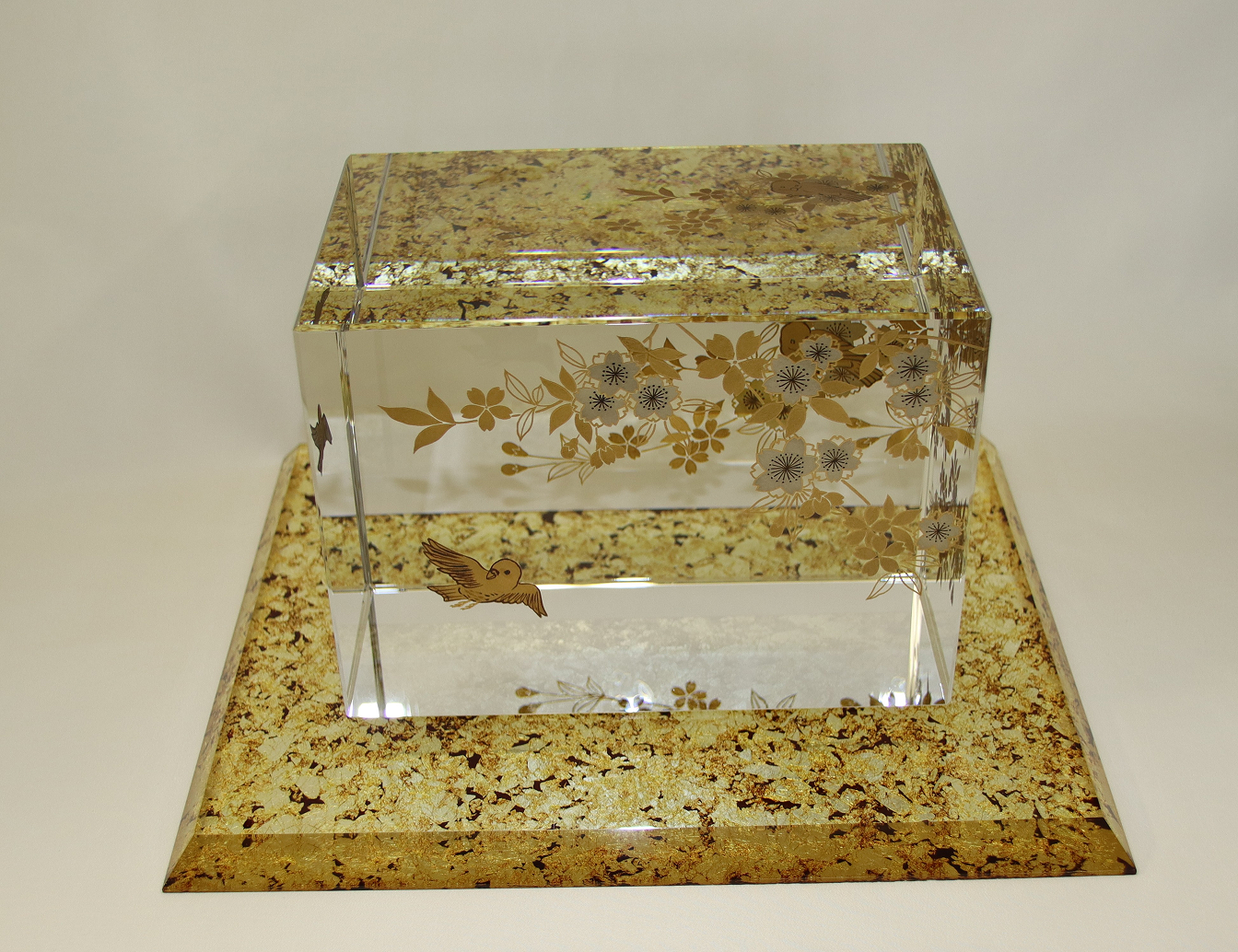
OHARA Inc. Product
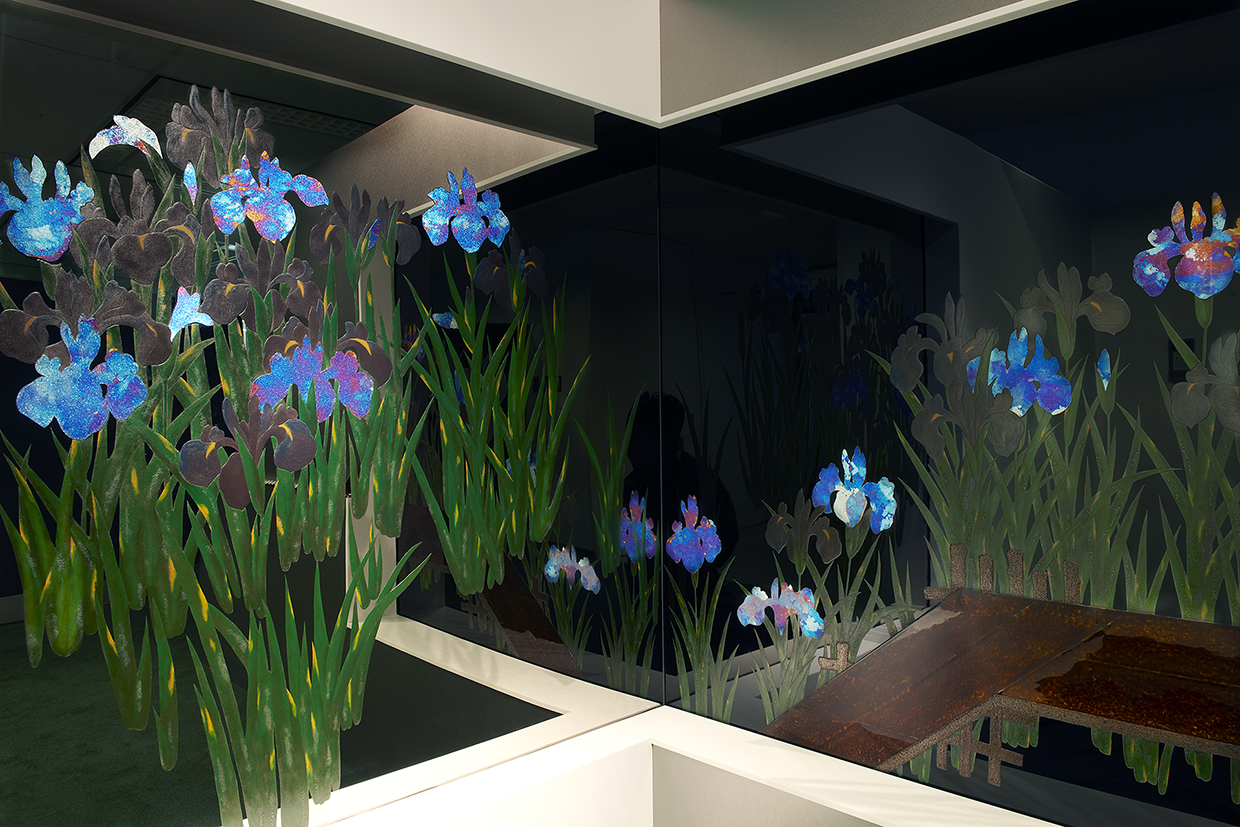
UEX, Ltd. Entrance
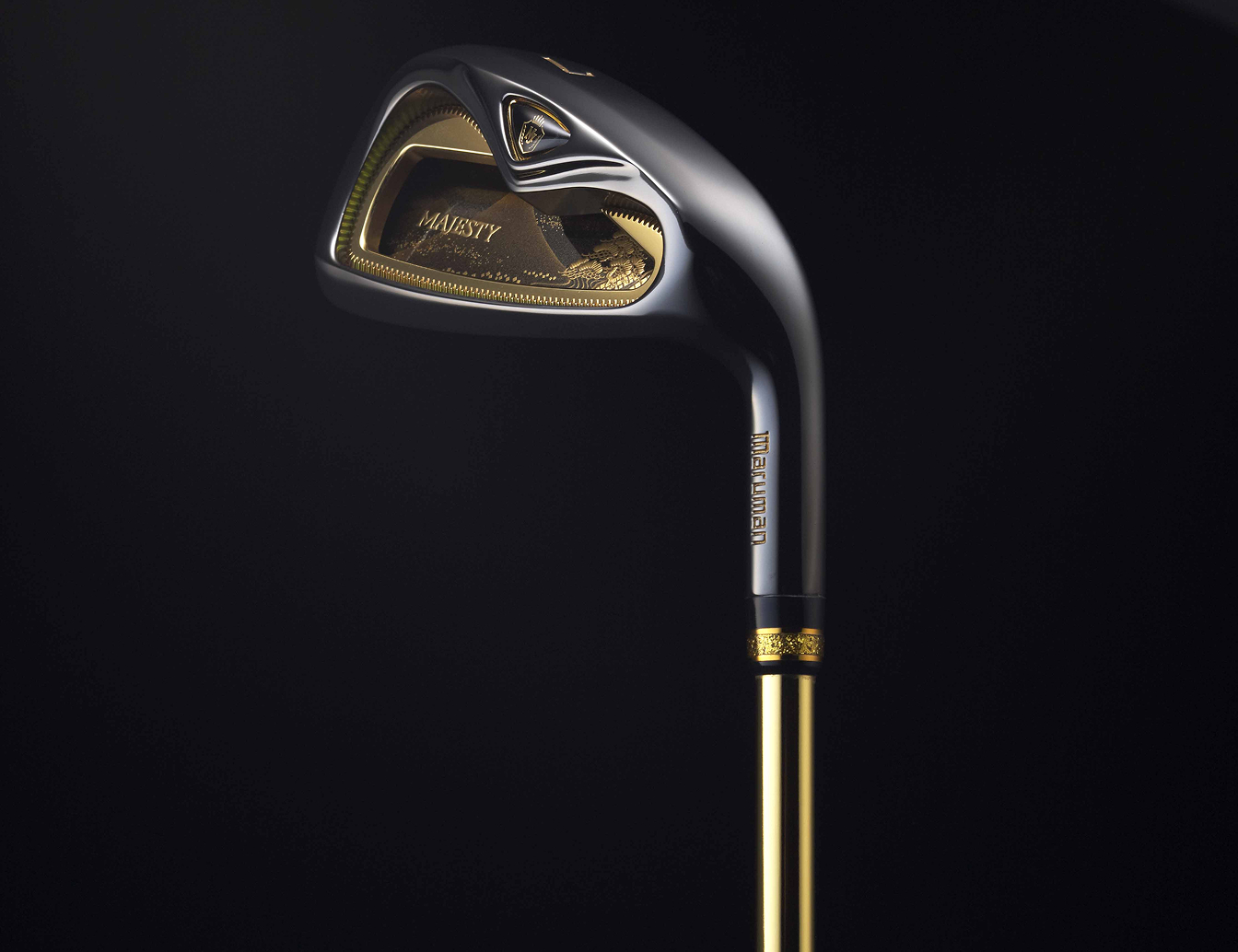
MAJESTY GOLF Co., Ltd. Product
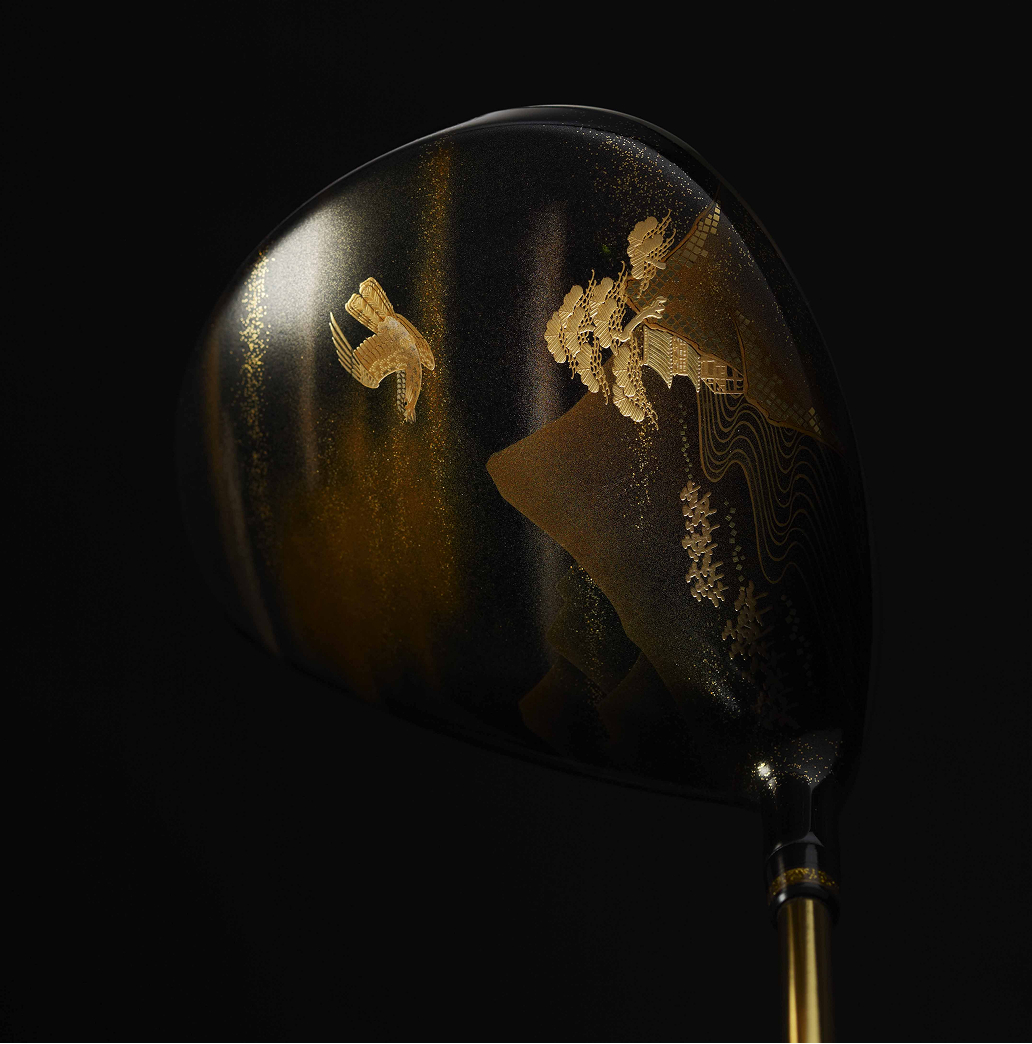
MAJESTY GOLF Co., Ltd. Product
The Power of Urushi
05. Coating / Titanium Maki‑e Polishing
Fusion of Robust Technology and Sensual Tactility.
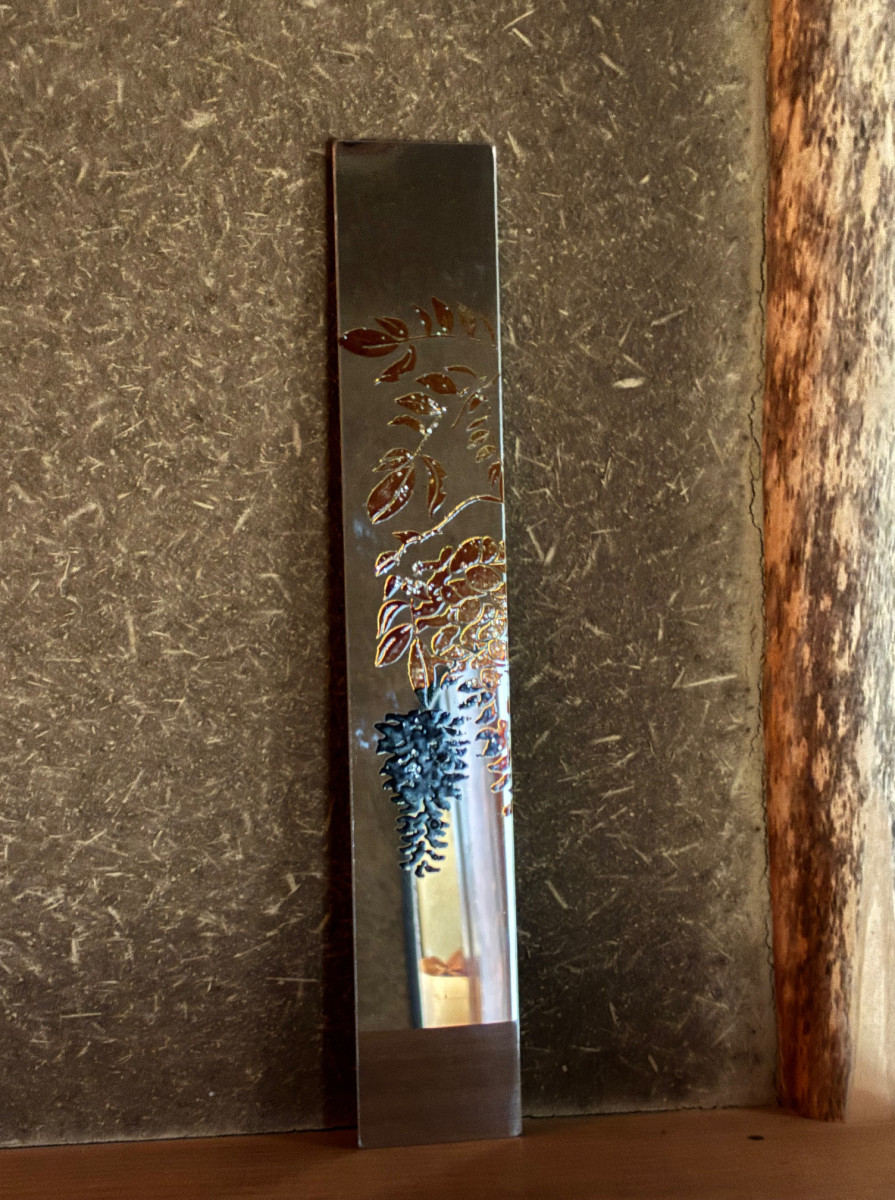
A hybrid material that fuses cutting‑edge titanium with urushi coating and precision polishing.
It balances the austere strength of metal with the warm, skin-like tactility of lacquer.
In high-end vehicle and aircraft interiors where durability under demanding conditions is essential—this material represents the highest expression of hospitality and engineered refinement.
| Materials | Titanium steel plate / Natural urushi |
|---|---|
| Co‑Creation Partners | Nippon Steel Corporation / Tokyo Stainless Grinding Co., Ltd. |
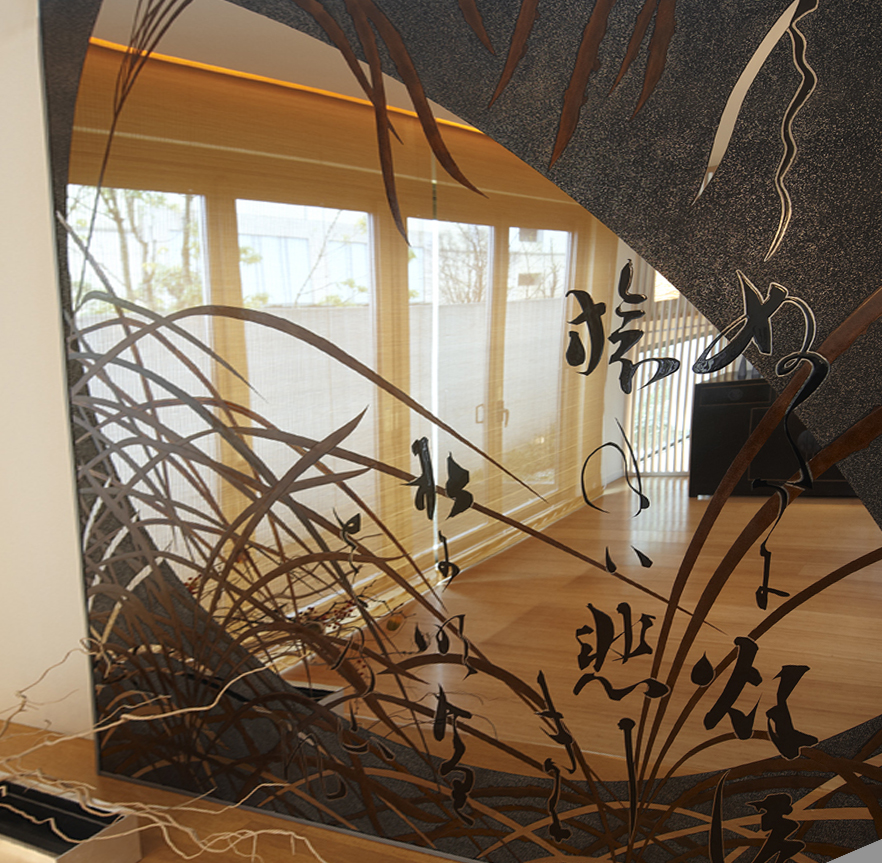
"Musashino" Titan Maki-e, Rhus Project, S Residence
A titanium‑based maki‑e work developed for S Residence, expressing the quiet depth and spatial rhythm of Musashino landscapes through polished metal and lacquer.
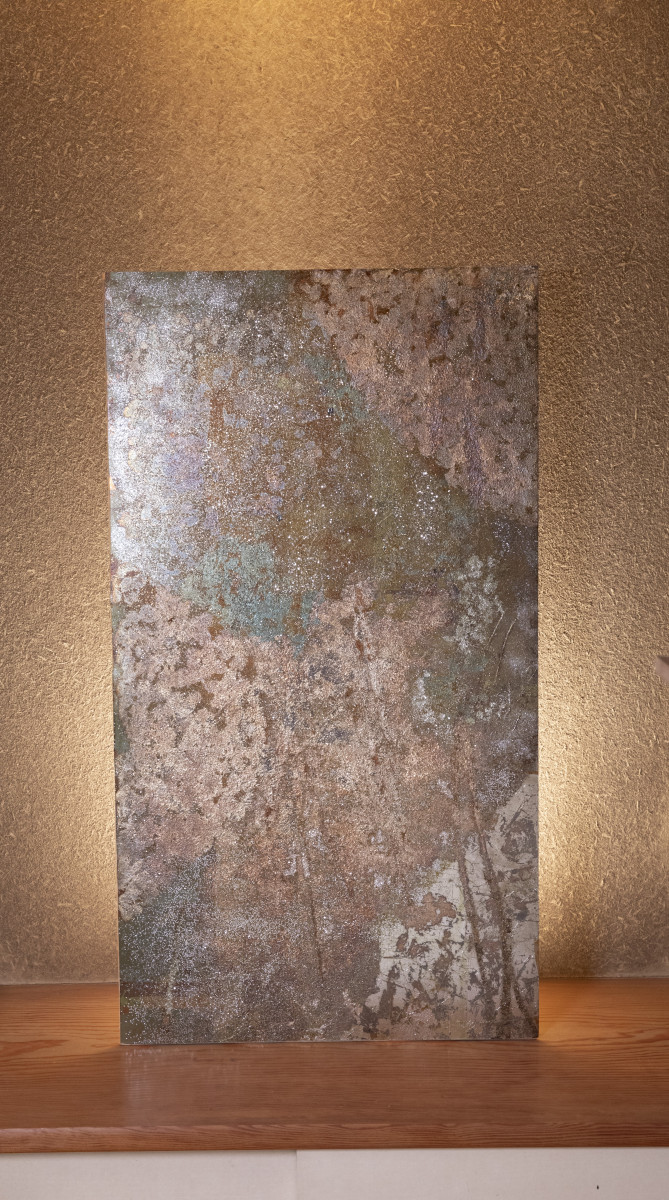
"Glacier Plum" Rhus Project, Titanium × Foil Art
A titanium and foil‑art composition that captures the crystalline clarity of ice and the delicate bloom of plum blossoms, realized as a contemporary urushi‑metal hybrid.