
The Core Of Duco`s
At the center of Duco’s work are our independently developed New Urushi Materials forming the foundation of a creative platform built on two pillars:
“Creating”—material innovation, and “Co‑Creating”—technical collaboration.
By uniting the inherent beauty of traditional urushi with the performance required in modern industries,
we extend its applications across architecture, mobility, interior design, and product development.
Six Materials and Technologies


Material × Craft × Design — OEM Services Using Duco’s New Urushi Materials —
We create products, art pieces, and architectural interior finishes using Duco’s urushi‑based materials.
Our OEM services unite advanced technical skill with refined craftsmanship, turning concepts into tangible form.
Co‑Creation Development— Collaborative R&D to Advance New Urushi Materials —
Building on our six urushi‑based material technologies,
this program enables companies, research institutions, and designers to jointly develop new materials, applications, and technical innovations.
Six Materials
Duco creates products using six foundational urushi‑based materials, while also advancing new material development through technical collaboration.
By combining natural urushi with a wider range of contemporary substrates, we generate next‑generation materials that evolve with the needs of our time.
Historically, urushi has been applied to ceramics, iron, wood, textiles, paper, and leather—transforming the character and performance of each substrate.
We carry this adaptive potential into modern material development, identifying the textures and functions required amid shifting global conditions and supply environments.
Together with our partners, we co‑create materials that look toward the future.
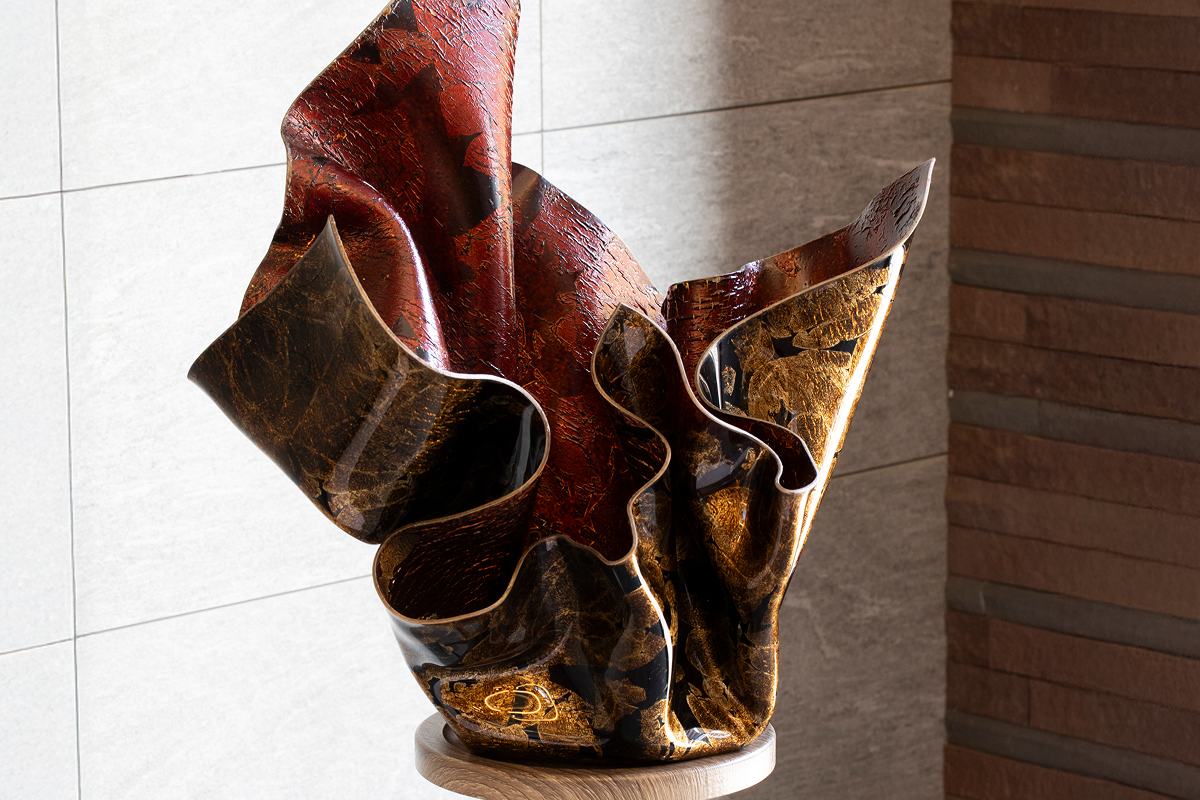
"Nami" Rhus Project - 3D Curved Natural Pattern Black Urushi Flower
Acry-U-lilLayered / Shaped Acrylic
Acry‑U‑lil is a multilayer acrylic panel composed of stacked single sheets. Like standard acrylic, it can be cut, polished, and shaped into a wide range of three‑dimensional forms. Its distinctive layered structure offers a fresh material expression, while its bendability enables applications such as door handles, furniture components, and one‑of‑a‑kind accessories enhanced by the brilliance of silver foil and urushi.
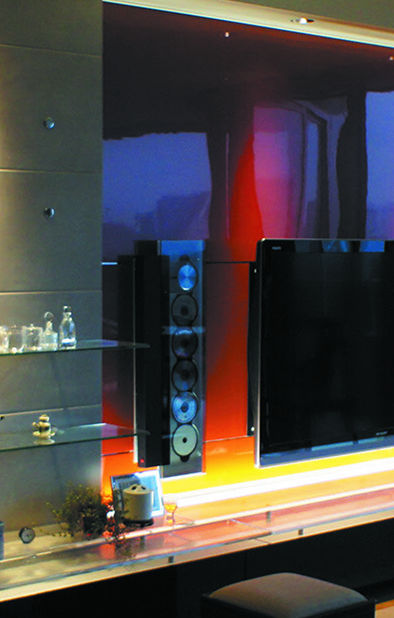
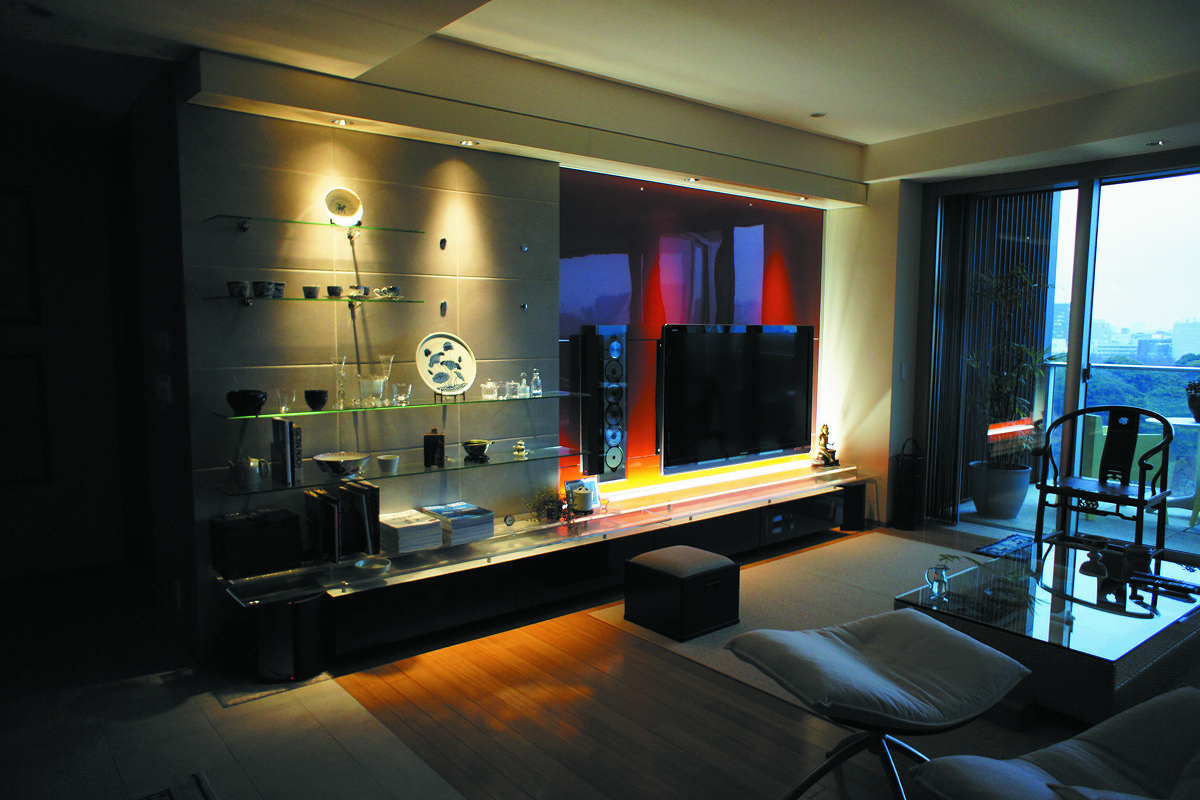
H Residence Decorative Wall Vermilion-Lacquered Titanium × Urushi
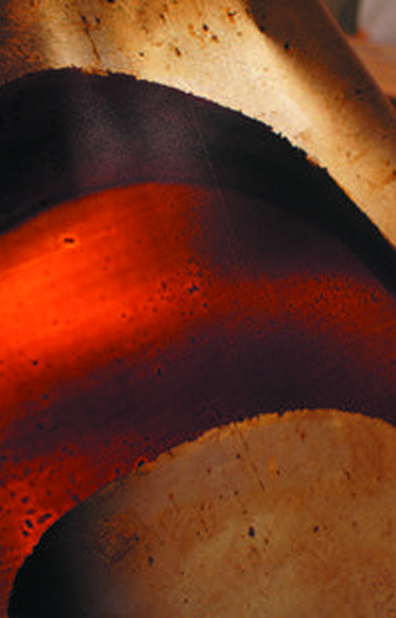
Titan UrushiTitanium × Natural Urushi
By combining lightweight, corrosion‑resistant titanium with natural urushi, this material achieves exceptional durability while offering a tactile warmth reminiscent of wood. Subtle amber, jet‑black, and vermilion lacquer layered over titanium’s metallic sheen create refined depth and spatial richness, making it suitable for architectural and interior applications.
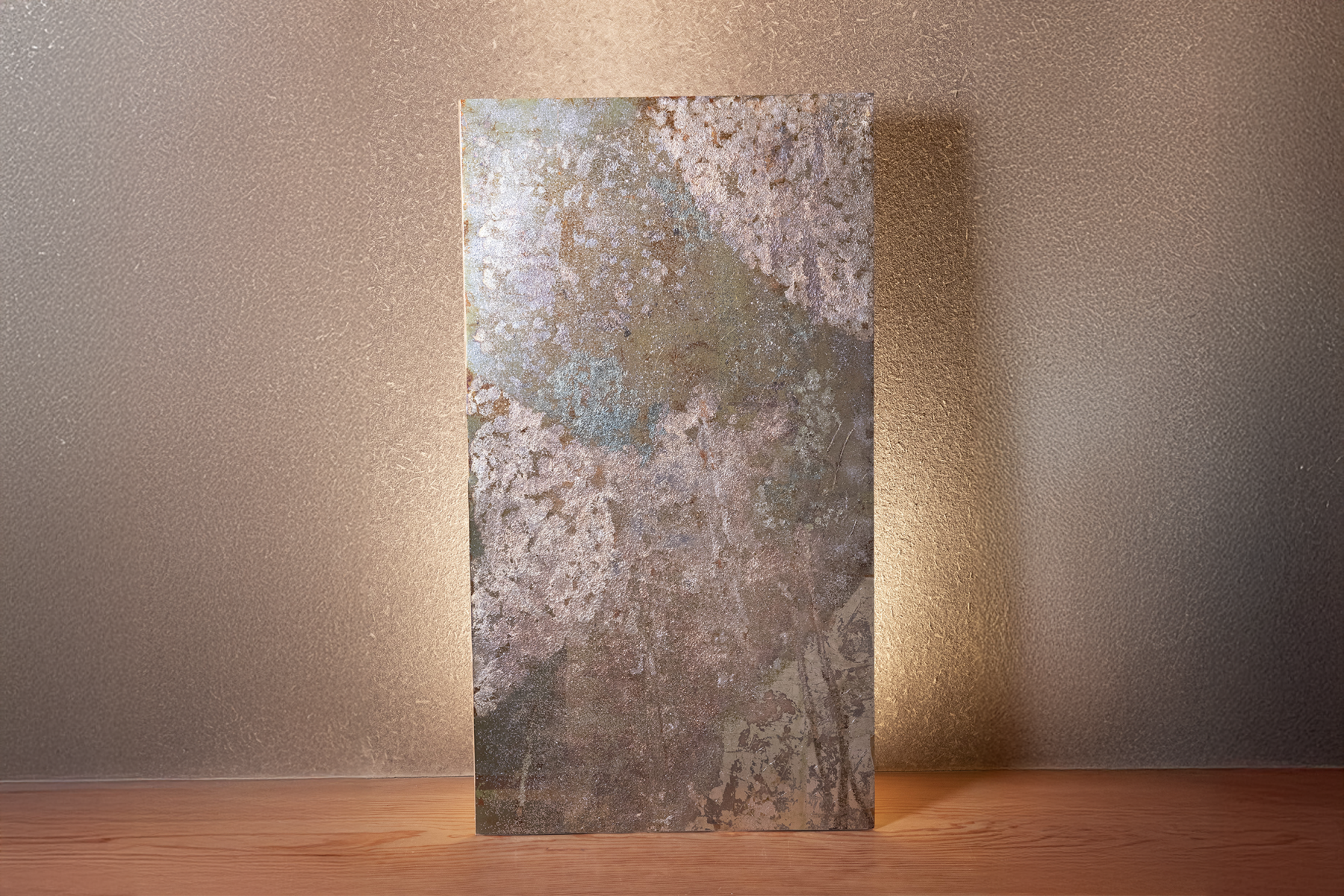
"Glacier Plum" Produced by Rhus Project
Titan Maki‑eTitanium × Maki‑e
Titan Maki‑e uses titanium powder and granules, applied onto lacquered designs where urushi serves as the adhesive. This new approach brings color expression directly to the titanium particles, creating a distinctive aged‑metal character not found in traditional maki‑e. The result is a material with an art‑like presence that expands the expressive possibilities of urushi.
"Urushi Veil Sakura" Rhus Project - Urushi Film Cherry Blossom Pattern
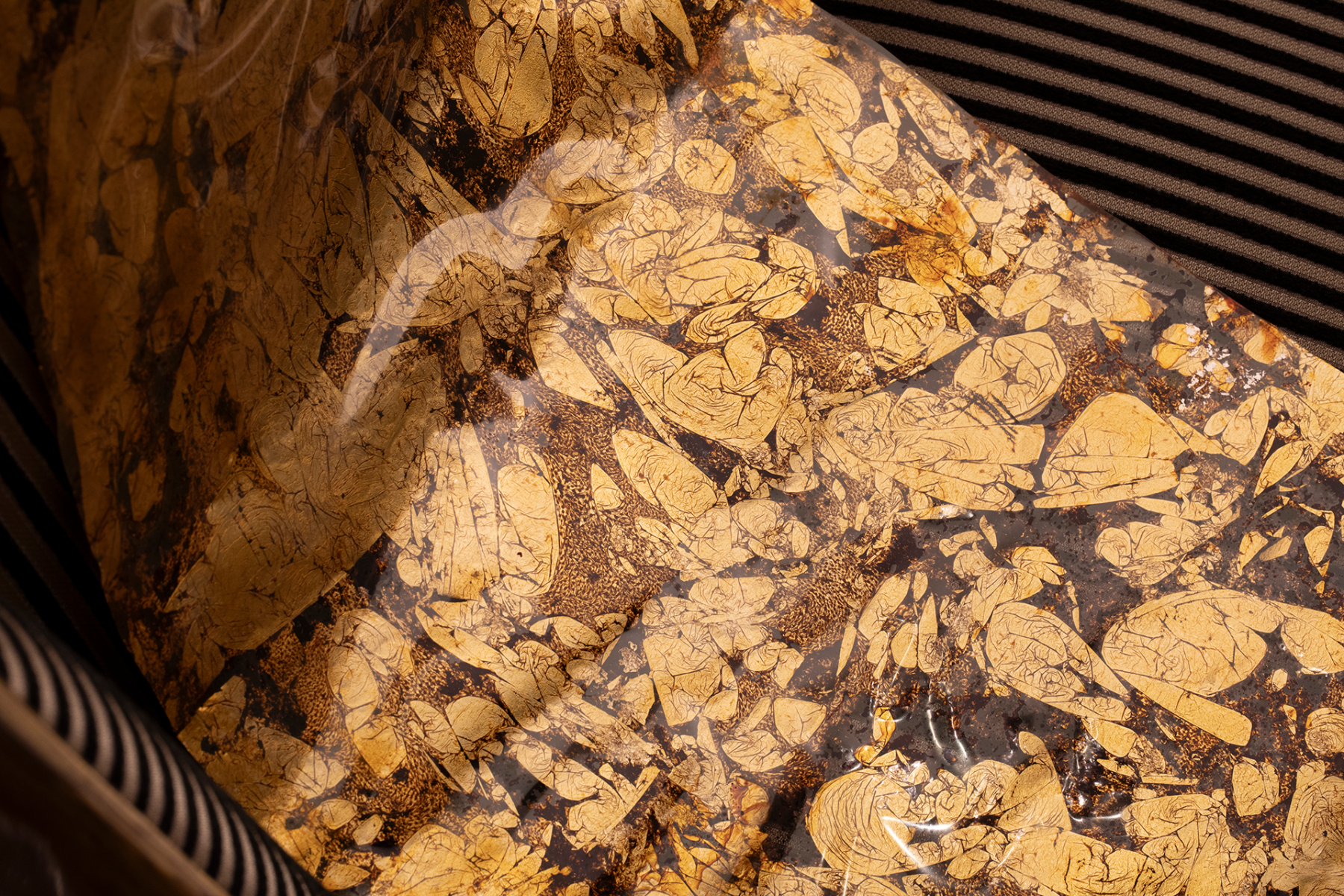
Urushi Film The Thinnest New Urushi Material
— Silver Leaf × Natural Urushi
The Thinnest New Urushi Material — Silver Leaf × Natural Urushi Developed from the traditional datsukanshitsu (dry‑lacquer removal) technique, this urushi‑and‑silver‑leaf film is the thinnest material in our urushi lineup. It can be freely cut with scissors, offering exceptional flexibility for design applications. Each sheet is delivered in vacuum‑sealed packaging to ensure optimal quality.
"Weeping Cherry Blossom" Optical Glass, Rhus Project
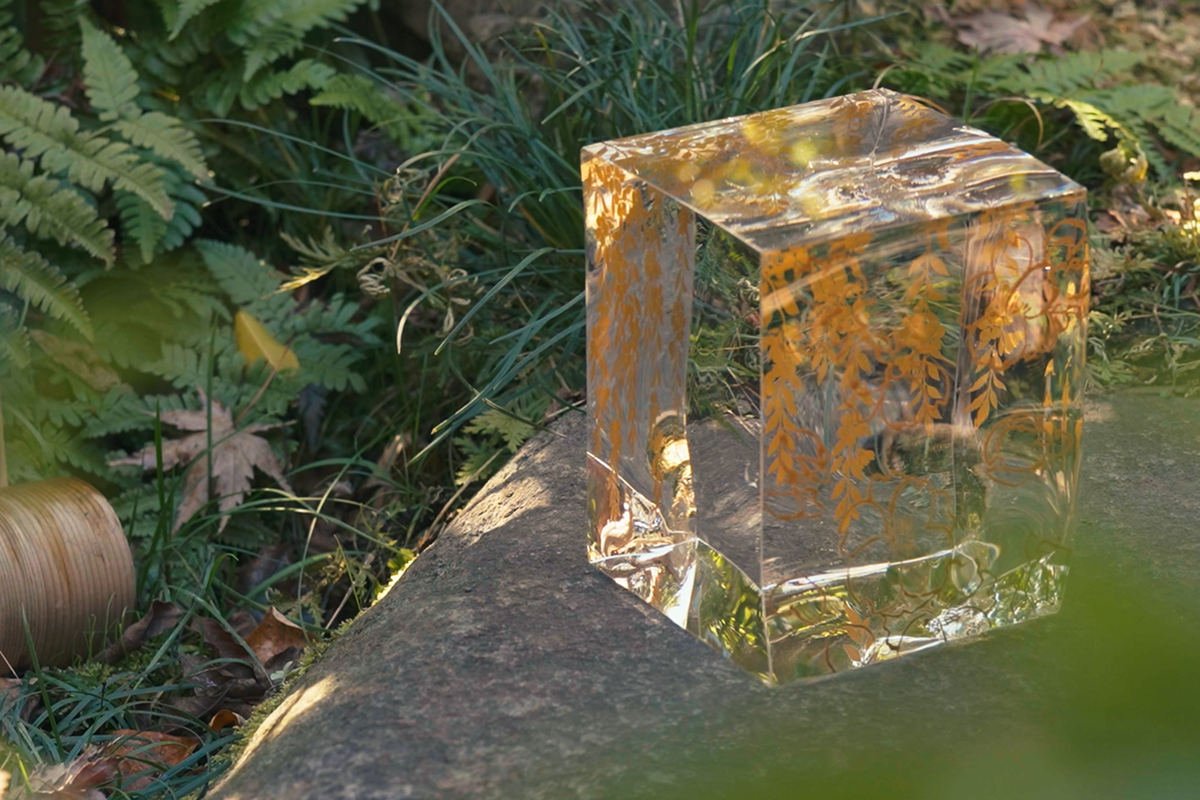
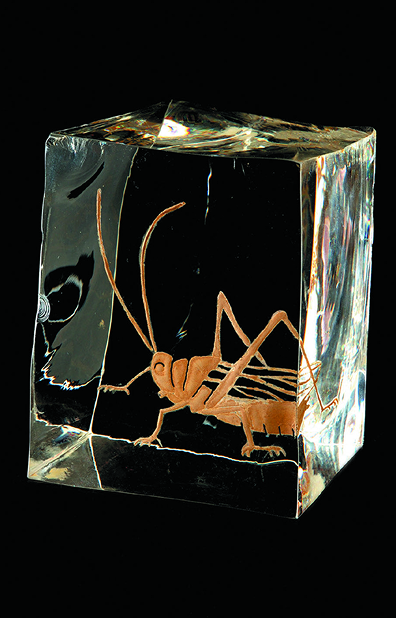
Glass Maki‑eGlass/Optical Lens × Traditional Maki‑e
Glass Maki‑e applies traditional maki‑e techniques onto glass or optical lenses. Beyond flat panels, the technique can be used on thick three‑dimensional forms—such as cylinders and rectangular pillars—creating a unique sense of depth and perspective within the glass. By incorporating the three distance perspectives—Heien (level distance), Shin’en (deep distance), and Kōen (high distance)—the design actively utilizes the reflections within the glass, producing a distinctive world that shifts in expression as the viewer’s perspective changes.
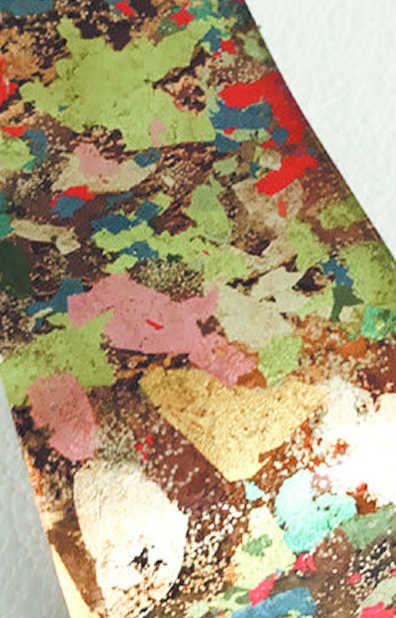
Natural Pattern: Retsu Pattern
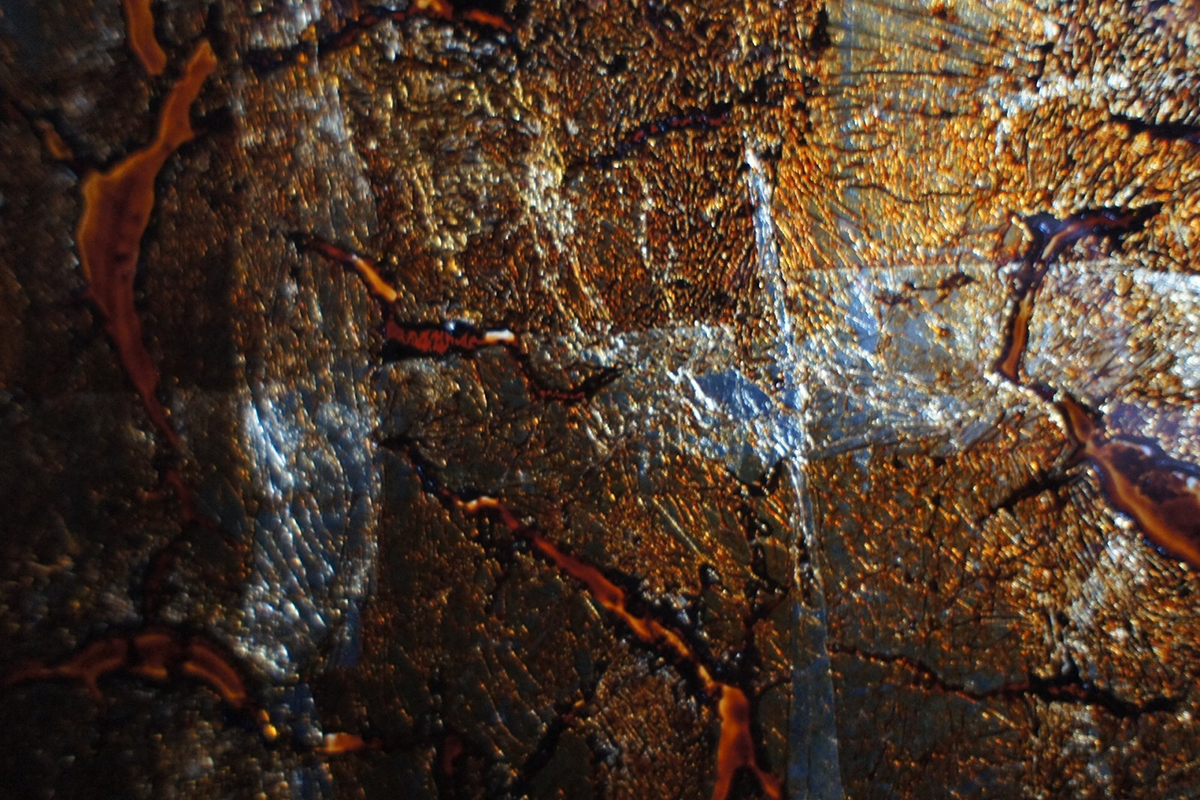
Natural PatternGlass/Acrylic × Natural Urushi
The organic motifs formed by the transparency of glass combined with natural urushi create a powerful, distinctive presence. This material can be applied across a wide range of fields, from interior surfaces and furniture to art pieces and accessories.
Types of Natural Patterns
-
- Crystal
-
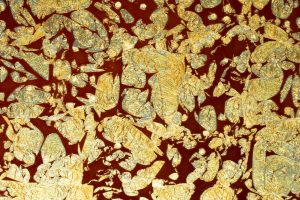
- Sakura
-
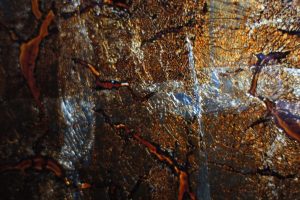
- Split
-
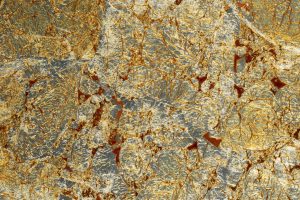
- Urushi in BloomS
-
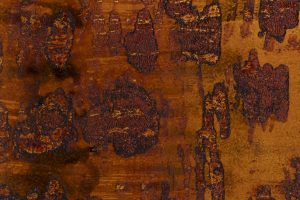
- Bark,Ripple
-
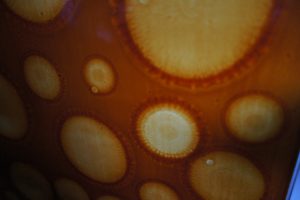
- Granite
-
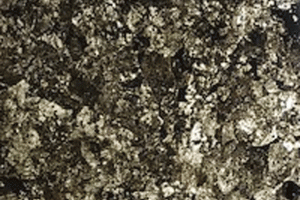
- Black
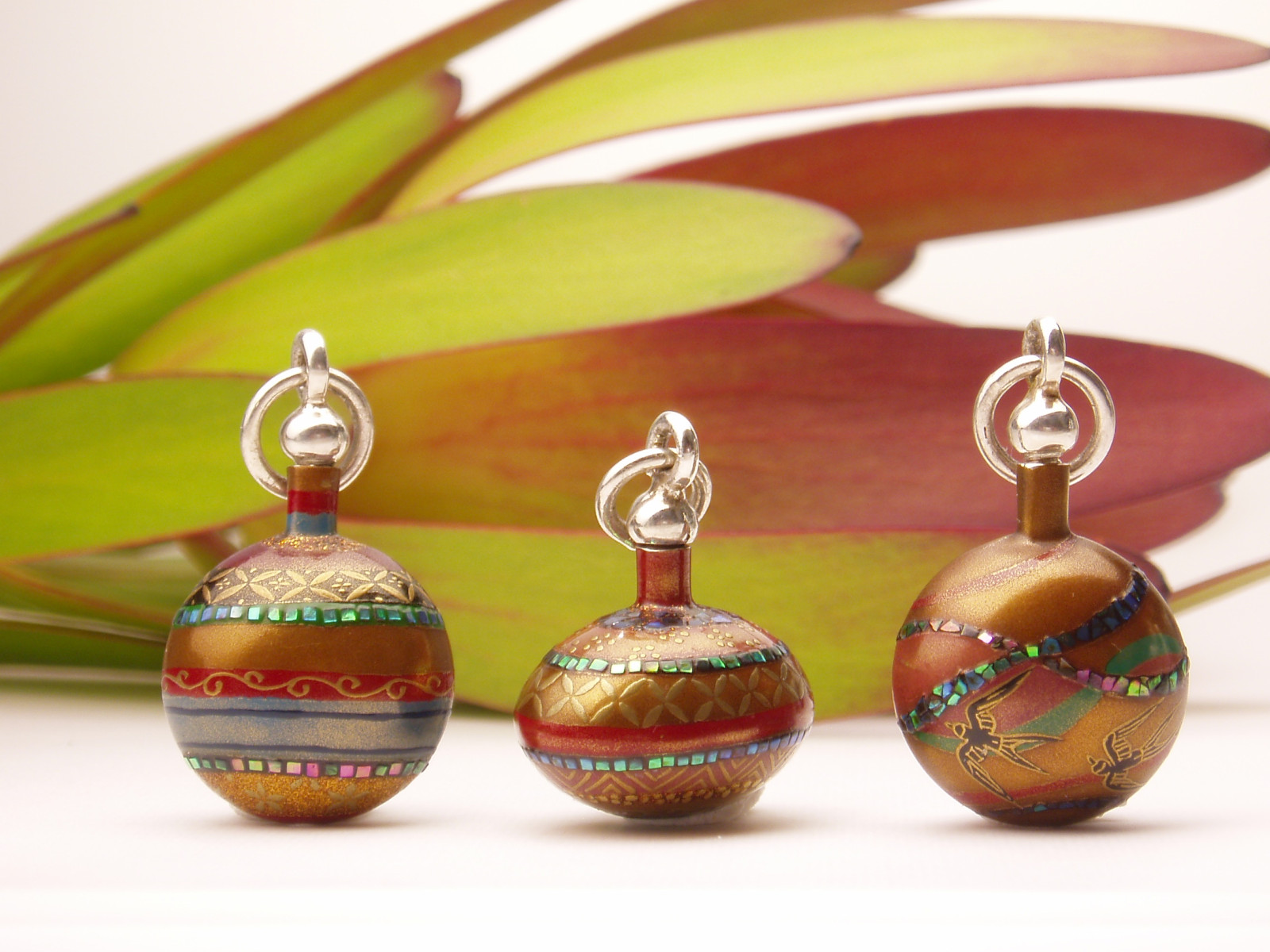
"Perfume Bottle" Hon-maki-e Komon, Rhus Project
Duco’s six proprietary materials
Natural Pattern, Acry‑U‑lil, Titan Urushi, Titan Maki‑e, Urushi Film, and Glass Maki‑e form an unparalleled material vocabulary exclusive to Duco.
Individually engineered to meet precise functional, tactile, and durability demands, each material bridges traditional urushi craftsmanship with advanced contemporary techniques.
They retain the profound optical depth and richness of urushi while introducing a refined modernity and forward‑looking design sensibility.
Even in mass production, every piece manifests a singular expression—affirming the inherent uniqueness of Duco’s material innovation.
01Interior Decorative Production (Architecture & Spatial Art)
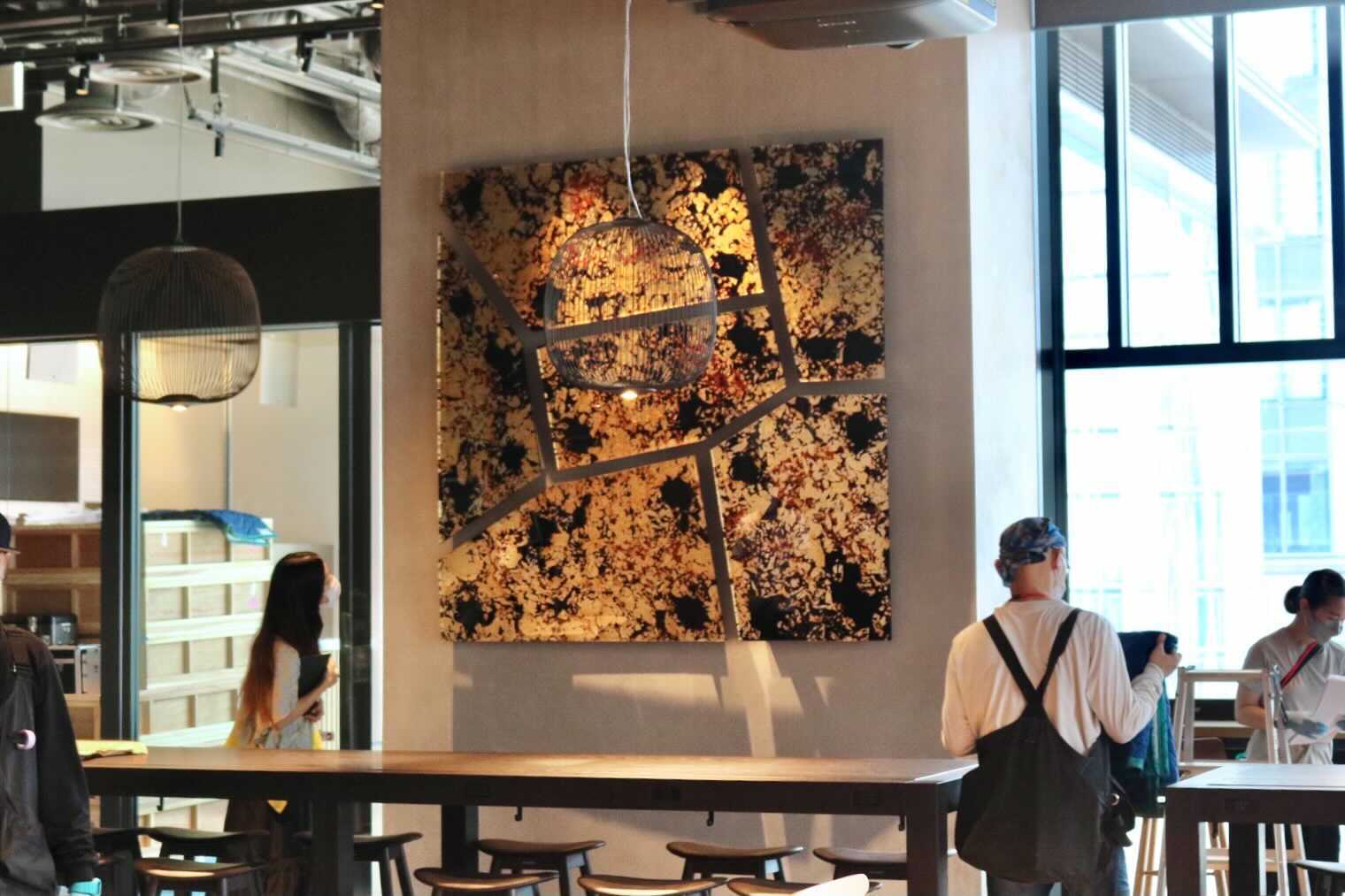
Duco’s materials demonstrate a distinctive presence in architectural environments, made possible through our core technologies.
Combining the depth and luminous quality of natural urushi with the strength and stability of contemporary materials, our finishes are selected for entrances, lounges, and shared spaces in high‑end residences and commercial buildings.
In collaboration with artists and designers, they serve as refined surface materials suited for premium spatial design.
- Walls and signage of corporate entrance
- Decorative elements in luxury condominium common areas
- Art panels for hotels and residences
- Custom interior materials developed with architectural design firms
The way urushi responds to light—shifting subtly with the environment—creates a serene yet striking spatial experience.
Designing from Concept to Narrative
Our materials open the door to stories rooted in natural substances, craftsmanship, culture, tradition, and human sensibility. Rather than simply manufacturing objects, we collaborate to define why a product embodies a particular material or technique. From original corporate gifts and retail items to sculptural objects for interior spaces, we design expressions tailored to each purpose. Grounded in urushi craftsmanship, we consider the full context in which each piece will be experienced—its setting, its role, and the brand narrative it supports—creating value that is truly one‑of‑a‑kind.
"ISHIGAKI" Acrylic, Urushi, Silver Leaf
2021 TOKYO TORCH Tokiwabashi Tower, Tokyo
Client: Mitsubishi Estate Co., Ltd.
Planning / Direction: KODAMA SCENE
Project Members: Takashi Nakahara (DENBAKU FANO DESIGN), Mai Tsunoo
Assistant: Tatsumasa Sonobe
Design: PDC - Product Design Center / Produced by Rhus Project
02Co‑Creation Development
Collaborative Research and Development to Advance Urushi New Materials
Leveraging Duco’s extensive expertise in urushi chemistry, material engineering, and production methods, we support partners from early‑stage research through prototyping and implementation. This co‑creation program integrates the mystical expressiveness of urushi with advanced functional properties such as weather resistance and conductivity.
Applied Research for Semi‑Product and Industrial Use
We refine material properties—weather resistance, flexibility, transparency, and conductivity—according to each project’s goals.
Through this process, we extend the potential of urushi into mobility, architectural materials, wearables, and luxury products.
R&D Support, Process Verification, and Prototyping
We assist in developing proprietary urushi‑based materials, introducing new techniques, and supporting prototyping for brands seeking enhanced value.
From production methods to mass‑manufacturing processes, we conduct joint verification to transform overlooked or unrealized value into tangible form.
Joint Development of New Materials & Brand Support
We collaborate on the creation of original materials and prototypes, preserving essential hand‑crafted elements while jointly validating scalable production processes.
This approach enables the integration of unique, high‑precision techniques suited to demanding quality standards and international projects.
Titanium Strip Mirror Finish "San-en Wisteria" Produced by Rhus Project
Polishing titanium and urushi—materials with vastly different hardness—on the same plane is ordinarily extremely difficult.
Together with Tokyo Stainless Grinding Co., Ltd., we developed a technique that achieves a mirror‑finish surface where titanium and maki‑e lacquer coexist as a single, unified plane.
| Feature | The urushi does not merely rest atop the metal; it becomes seamlessly integrated with it. |
|---|---|
| Co‑Creation Partners | Nippon Steel Corporation / Tokyo Stainless Grinding Co., Ltd. |
Co‑Creating the Future through Natural Power and Industrial Knowledge
Creation of New Materials
By bonding urushi at the molecular level with materials owned by your company—such as polycarbonate, recycled plastics, or specialty alloys—we jointly develop a “third material” that unites structural strength, weather resistance, and a refined artistic texture.
Implementation of Advanced Technologies
We integrate urushi’s inherent properties—natural insulation, profound tactile comfort, and its unique interplay of light absorption and reflection—
with contemporary technologies to achieve the highest synthesis of function and beauty.
Redefining Spatial Experience
These technologies extend into haute‑couture applications for home appliances, audio equipment, and interior devices, as well as interior components for high‑end automobiles, aircraft, bullet trains, and yachts.
Rooted in tradition, urushi continues to evolve into a material suited for advanced industries, offering a new vision of spatial experience.
Service menuServices
At the Core of Duco
01Interior Decorative Production (Architecture & Spatial Art)
02Co-Creation Development
03Product Manufacturing
04Seminars
05Repair / Redesign